

You asked for it and we listened. In this column, we ask operators of all sizes and from all walks of the industry a question about their business and report their answers so you can assess how your own company compares to your peers. If you would like to participate, please email Rob Smentek at
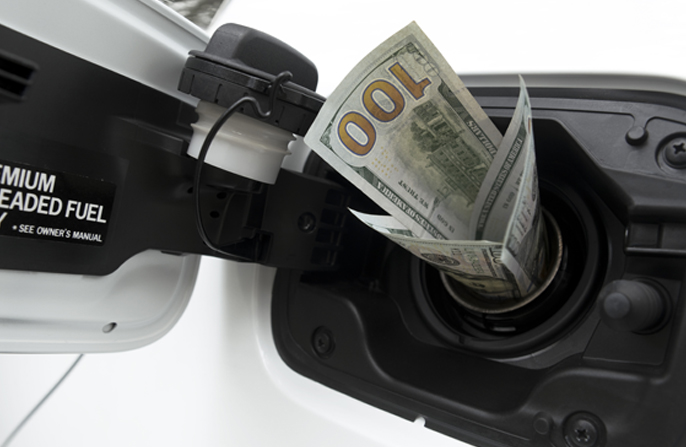
TOPIC: With the sudden price increases in fuel, are you considering adding a surcharge? If so, are you using a flat rate or percentage?
 Fuel costs are already accounted for within our pricing structure. We currently include a modest fuel surcharge in our rates, so there has not been a need to add anything new or separate.
Our pricing model is dynamic, like the airline and hotel industries. As expenses, especially fuel costs, fluctuate, we adjust our rates in real time rather than applying a fixed flat fee or percentage across the board. This allows us to stay competitive while still covering rising costs without overcorrecting when prices level off. This is just one of the many benefits of running a dynamic pricing model..
Kirk Bagger, Corporate Travel Manager & CEO
Captains Car Service in Cleveland, Ohio
 Currently, we have not implemented any additional fuel charges. That said, if fuel prices continue to increase significantly, we may have no choice but to pass a portion of that added cost onto the consumer. We do our best to absorb normal fluctuations, but extreme swings in fuel prices may require a reasonable adjustment to offset rising operating expenses, and this becomes necessary to maintain service and operating standards.
Quentin Bassey, President
RSTQ Transportation in Washington, D.C.
 We’ve kept our existing fuel surcharge in place, as it is more of a headache to change it around due to too many differing pricing structures for the different vehicles and trip types.
Nick Boccio, General Manager
Buffalo Limousine in Buffalo, N.Y.
 Given the nature of our operations, fuel costs have always been a key consideration. As a California-based company, we consistently face higher fuel prices compared to much of the rest of the country, so we’ve long maintained a standard 10% fuel surcharge year-round to help offset those ongoing costs. At this time, despite the recent increases driven by global events, we are not planning to adjust our fuel surcharge. Our current structure has been designed to account for these kinds of fluctuations, allowing us to provide consistency and predictability for our customers.
Kevin Mullane, Owner
Silver Oak Transportation in Hilton Head Island, S.C.
 Recent uncertainty has made clients more price-conscious and more cautious with advance bookings, especially for corporate and discretionary travel. While demand for special events remains steady, we’re seeing shorter booking windows and increased sensitivity to value, which requires us to stay flexible and responsive. Rising costs tied to tariffs, fuel, insurance, and vehicle maintenance have put pressure on margins, so we’ve focused on smarter pricing, tighter cost controls, and maximizing fleet utilization rather than passing along large price increases to customers.
Harry Dhillon, President
Ecko Worldwide Transportation in Santa Clara, California
 Fuel surcharge decisions are tied to a fuel index so clients have a transparent benchmark to reference when fuel adjustments are added, changed, or removed. We believe this is the most disciplined way to handle fuel volatility because it creates consistency, reduces ambiguity, and keeps the conversation grounded in a measurable operating cost rather than opinion. Our focus is on protecting service quality, safety, and margins while communicating pricing changes clearly and fairly.
Sean Duval, President & CEO
Golden Limousine in Milan, Mich.
 With the recent increase in fuel costs, we are implementing a fuel surcharge based on a percentage rather than a flat rate, which we feel is the most transparent and scalable way to handle fluctuations. It allows us to adjust in real time with the market without constantly reworking pricing or creating confusion for clients. A flat fee can quickly become outdated in either direction, whereas a percentage keeps things aligned with actual trip costs.
From a client communication standpoint, we position it as a temporary and adjustable measure tied directly to fuel volatility, not a permanent price increase. That distinction has helped maintain trust and understanding.
At the end of the day, the goal is to protect margins while staying fair and consistent for our clients, and the percentage model gives us the flexibility to do both.
Shawn Glasgow, CEO
Peak Limo in Charlotte N.C.
 Fortunately, Georgia’s governor just signed a bill that removes the sales tax on gas for the next 60 days—so that will help. While we’ve had a fuel surcharge of 10% of the base total in place for many years (which does not include all the other administrative fees), I am increasing it to 12%. Unless fuel spikes above $4.50 here, I will hold the fee at 12% of the total base.
Jeff Greene, President
Greene Worldwide Transportation in Atlanta, Ga.
 We must make quick decisions that impact our businesses immediately, especially with fuel costs on the rise so rapidly. The choice to add a percentage surcharge clearly makes sense based on the overall contract cost. Therefore, we take the size of the vehicle and its associated expenses into consideration. You can always look at a flat fee if you deem it necessary for adjustment purposes. Additionally, we prefer to do a fuel surcharge that we can always reduce or eliminate as the market dictates. If you just raise rates, it’s harder to reduce them vs. adjusting fuel charges.
Len Joseph, President
On The Town Limousines in Frederick, Md.
 The current fuel increase is a real concern for us. However, we have not raised our rates since 2023. With current demand softening and continued pricing pressure from both licensed and unlicensed operators, we are choosing to keep our pricing stable for now and absorb the recent fuel increases.
Currently in Illinois, we are at around $4 per gallon. We are not planning to introduce a fuel surcharge unless medium diesel prices exceed $6 per gallon. If that threshold is reached, we would consider implementing a modest surcharge of 5%-10%, depending on the extent of the increase.
For the time being, our focus remains on maintaining competitive pricing while continuing to deliver reliable, high-quality service to our clients.
Stefan Kisiov, President
K&G Coach Line in Park Ridge, Ill.
 From an operational standpoint, fuel surcharges are something we have resisted for a long time. For many years, we have chosen not to pass those costs on to our clients. However, over the past five years, with the volatility in fuel pricing, we’ve implemented a surcharge that only activates once fuel reaches a certain threshold. This allows us to remain fair to both our clients and our business without constantly adjusting base pricing.
Rather than using a fixed flat rate, we’ve focused on a more dynamic approach that reflects real-time conditions. Some of the key challenges that operators face are consistency and automation, which is why we built this functionality directly into our online reservation system. What started as an internal solution has evolved into a feature that can automatically apply fuel adjustments based on predefined rules, removing manual work and ensuring accuracy.
Moses Koktsidis, Owner
Second Nature Limousine in Wheeler, Ind.
 Inconsistency in fuel prices has been a constant challenge in recent years. Shortly after the price surge during the COVID shutdown, we implemented a fuel surcharge. When determining how this charge should be applied, we discussed two possible methods: billing clients based on mileage or adding a percentage-based fuel surcharge. After reviewing the processes for each method, we found that our software was more compatible with a percentage-based fee than with calculating the mileage for each trip.
Once we selected a percentage-based fee, we also determined that it was important to base this percentage on the Consumer Price Index. This approach allows us the flexibility to adjust the fee on a quarterly or annual basis in response to changing market conditions.
Jason Santiago, General Manager
Exclusive Sedan in Santa Clarita, Calif.
 I have always considered fuel a part of our rate, and not a separate line item. Over the years, I’ve seen colleagues and affiliates add a fuel surcharge, and even an “emergency fuel surcharge.” Frankly, I can’t help but wonder what is next... “a super-secret, double probation emergency fuel surcharge?” However, the more the fuel prices climb—and the longer they remain inflated—may ultimately have me reconsidering my position on a fuel surcharge.
Quentin Shackelford, Owner
AllClassLimo.com in Wichita, Kan.
 The recent fuel price increases are certainly something we are watching closely, as they do have an impact on operating costs. That said, we prefer not to react too quickly to short-term fluctuations by introducing a surcharge immediately. At this stage, we have not applied a fuel surcharge. Our view is that these increases should first be assessed in the broader context of the market, existing pricing structures, and client expectations. In a service segment where consistency and trust are important, we believe it is better to act carefully than too hastily.
Ralph Van Delden, President
Van Delden Limousine & Travel Services in Amsterdam, The Netherlands
 Since February 28, we raised the surface transportation charge (STC) from 7.5% of the fare to 9%—and then to 10% of the fare plus wait-time charges and stop charges. We generally do not notify our clients as the headlines do all the work for us.
As we typically do, we track the cost of fuel in our market at AAA Fuel Gauge, and we calculate the increased rate for the average trip. Then, we consider how much we need to raise the STC to meet those new costs. Part of our elevator pitch is that we have one of the only fuel surcharges that is responsive to decreases in the price of fuel.
Charles Wisniewski, President & CEO
Teddy’s Transportation System in Norwalk, Conn.
 We have adopted a fuel surcharge, and percentage seems to be the fairest solution for the consumer. The negative side is that we are implementing the surcharge for future trips when it is possible that fuel costs may go back down.
Scott Woodruff, President & CEO
Majestic Limo & Coach in West Des Moines, Iowa
 Prior to the Middle East crisis, fuel prices in Hong Kong, Shanghai, Singapore, and Tokyo remained relatively stable. Since the conflict began, however, prices have risen sharply across these key markets: Hong Kong experienced a sudden 10% jump in a single day; Shanghai gasoline recorded an increase of more than 13%; Singapore pump prices surged past $3.40 per liter, representing a rise of roughly 47% in just a few weeks and surpassing even the highs seen during the Ukraine crisis; while Tokyo recorded the sharpest surge, with retail gasoline jumping nearly 18% in a single week to reach the highest level since records began, prompting the government to restart subsidies.
Our assessment is that these adjustments reflect a short-term phenomenon, influenced in part by governments tapping strategic reserves to slow further escalation, hence we may plan to impose fuel surcharges in percentage as short-term solution. Meanwhile, we encourage the adoption of electric vehicles as a sustainable alternative to mitigate exposure to fuel price volatility.
We will continue to monitor developments closely. Should the crisis persist and oil prices establish a long-term upward trend, we will implement a flat rate adjustment—a one-time adjustment to align with the new cost structure.
Amy Yan, Co-Founder and Managing Partner
AmyExpress in Kowloon, Hong Kong
We’ve loved hearing your answers to our benchmarking questions—but we always welcome suggestions for future topics, too!
Send an email to
[04.26]

