
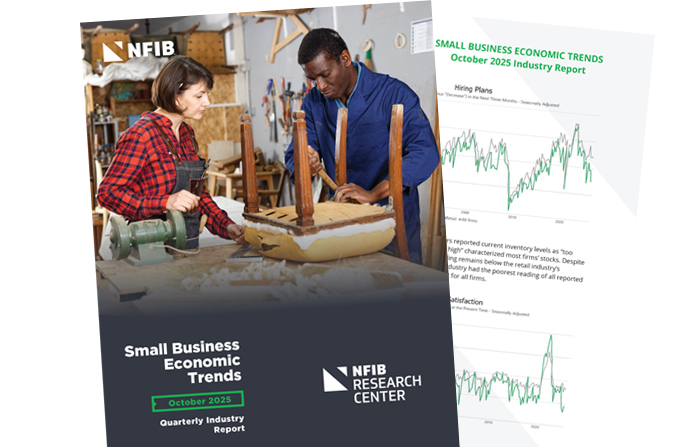
The latest industry-specific Small Business Economic Trends Industry report shows a mixed outlook for small businesses, with overall optimism slipping across most sectors. The report, compiled and published quarterly by business organization National Federation of Independent Business (NFIB), focused on four areas of the economy: manufacturing, construction, retail, and services. For the service industry, confidence fell 3.6 points to 95.6 (the 52-year average is 98), dropping below its long-term average for the October 2025 report.
While 63% of small business owners across all sectors still rate their business health as good or excellent, service-sector expectations for future sales softened. A net -3% of service businesses expect higher sales in the coming months, and fewer plan capital investments—a trend that may mirror operators delaying fleet purchases or upgrades. Supply chain pressures also continue, with 60% of all small businesses reporting disruptions impacting operations, parts availability, and equipment costs.
Other industries show similar uncertainty, especially those in the thick of the clash of tariffs and what is shaping up to be a K-shaped economy. Retail posted the lowest optimism, while manufacturing held steady but softened from last quarter. Construction was the only standout, posting higher optimism driven by strong hiring and sales expectations.
Construction: A Bright Spot in an Otherwise Wary Landscape
Construction posted the highest optimism—up 2.2 points to 105.5—driven by strong sales and hiring plans. Notably, 50% of construction businesses report unfilled jobs, highlighting a nationwide labor shortage that also affects transportation companies seeking qualified chauffeurs.
 NFIB Research Center Executive Director Holly Wade
Manufacturing: Softening Expectations Despite Above-Average Optimism
Manufacturing optimism landed at 100.1, still above many sectors but down from last quarter. Hiring plans remain strong—a signal that competition for qualified workers remains elevated across industries.
Retail: Lowest Optimism, Reflecting Consumer Uncertainty
Retail experienced the weakest outlook (Index: 94.9), driven by declining earnings and hiring hesitancy. This may indirectly influence chauffeured transportation through softer consumer spending and reduced discretionary travel.
“Small business optimism fell in all reported industries except for construction, which was the most optimistic out of the four industries due to higher sales expectations and hiring plans,” said NFIB Research Center Executive Director Holly Wade. “Despite the diverging trends in optimism among industry sectors, 63% of small business owners rated the health of their business as excellent or good.”
The data suggest ongoing caution as companies manage hiring challenges, variable demand, and rising operating costs—but the majority of small businesses remain confident in their overall financial health.
The full report is available here.
Visit nfib.com for more information.
[12.02.25]

